


Financial professionals make sense of the complexities of finance for everyday people’s lives. They are professional translators between one complex adaptive system (markets) and another complex adaptive system (humanity).
They’ve responded eagerly to the distinction between Fast Time & Slow Time in my book, because it can help clients who just rewatched The Big Short stop panicking.
They’ve also asked some good questions about the concept. How does it work? What are the signs? Are we in Fast Time now? Is Slow Time boring?
This is my attempt to present the theory in its fullest form.
Though there were precedents, it took Daniel Kahneman, Amos Tversky, and Richard Thaler to fully theorize academic Psychology’s insights for economics. Then, great writers like Morgan Housel and Daniel Crosby translated those theories into workable actions.
To date, no one has done this for Historiography (academic theories of history). The most common use of the past in the real world is “law office history,” a repository of stories to make a case. The most common audience of academic historians is other historians. But history is, at its core, a discipline about humans and time.
So is finance.
Time Change
Time is relative.
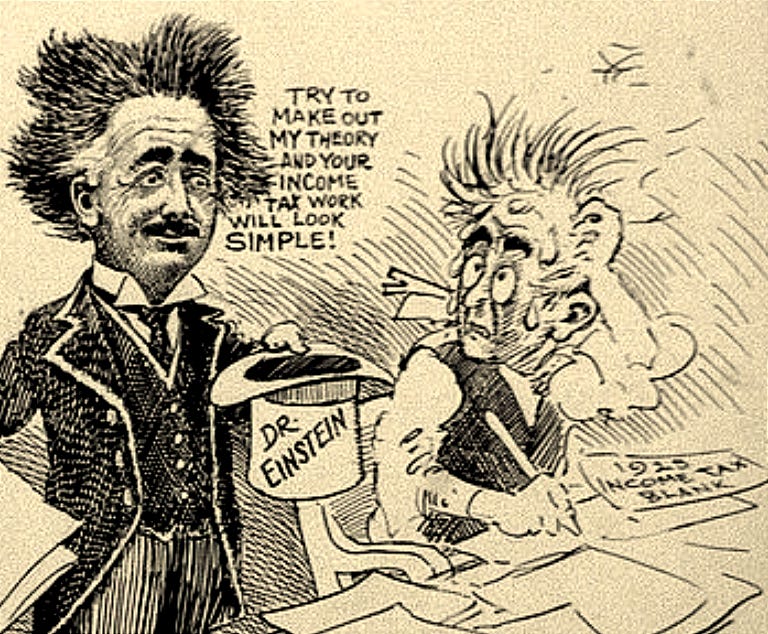
We know this because in 8th grade Mrs. McGrath said so… because the textbook said so… because Einstein said so. She then turned on an animated PBS video to explain it because, more than likely, Mrs. McGrath didn’t really get it, either.
We know it’s true. It still doesn’t make sense.
Mrs. McGrath’s video explained that two clocks in two places showed different times because of gravity. In 1971, someone put a clock on an airplane to prove it. In 2014, Paramount put a Matthew McConaughey into space to prove it more.1
Time is “the dimension where change unfolds,” and that change is more (or less) rapid in different space under different forces.2 Enter mathematician Benoît Mandelbrot, who suggested that markets had “trading time,” which speed up or slow down under volatility.3
Imagine I put a clock on a phone and that phone on your wrist. I know, this is Dick Tracy level tech, but let us dream together.
Now, I put another clock on the floor of the New York Stock Exchange
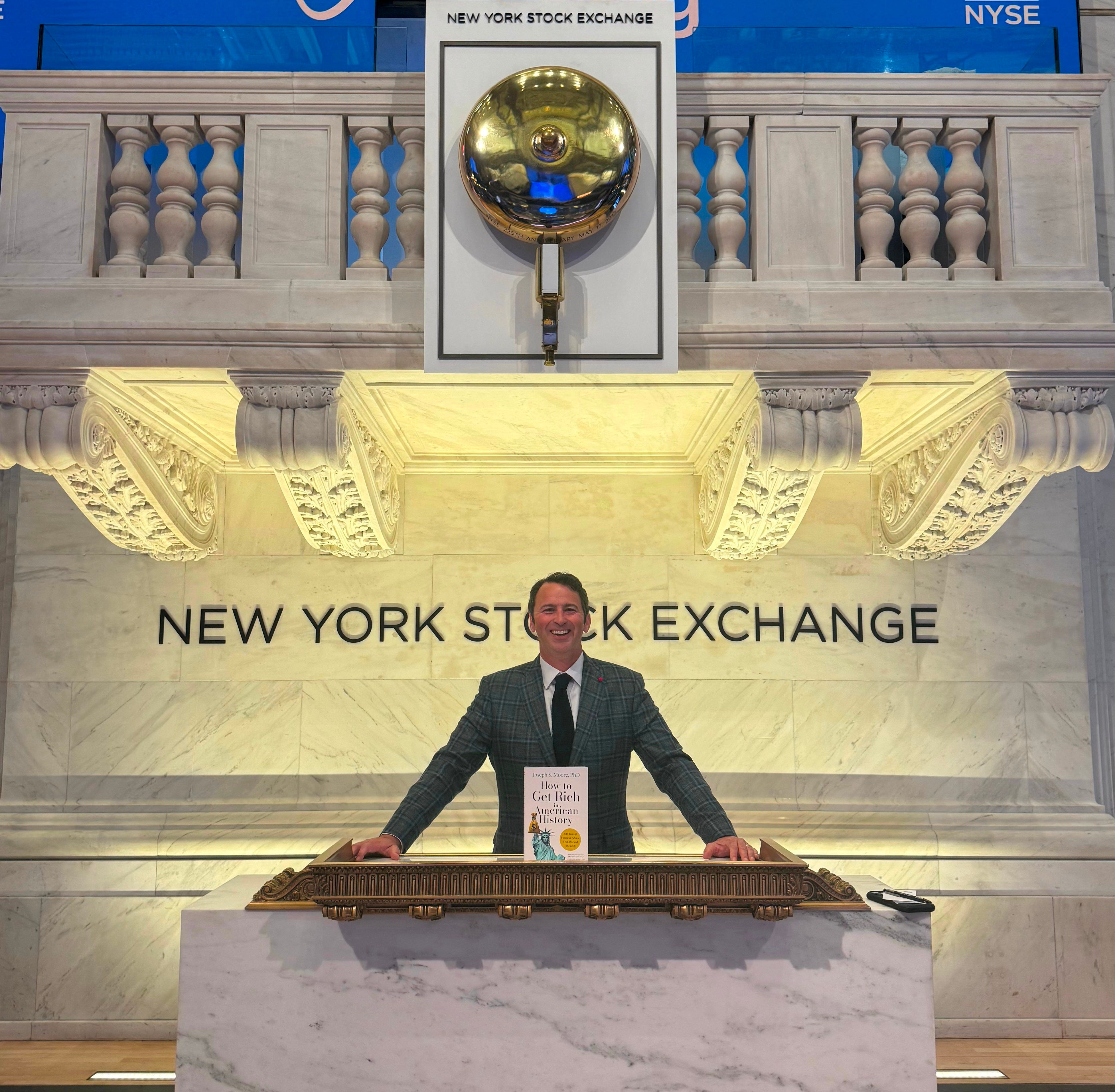
Your futuristic spy clock-phone-watch is going to follow normal time.
But the clock on the stock exchange ticks only when the S&P 500 has a normal minute of historical returns. A unit of time = a unit of average market activity. On most days, your watch-clock and this market-clock tell roughly the same time. They may stay synced for months.
But other days, the clock on the stock exchange is going to go nuts, leaping forward (or backward) an entire year. Your watch say it’s Friday at 5, but the market says it is next year (or, worse, last year). Welcome to Fast Time.4
Mastering the Art of Fast Time
Mandelbrot said that trading time is not smooth, but rough. A multi-decade market chart shows long waves. But double click and you’ll see jagged edges cutting into the waves. This roughness repeats when you magnify again. The jaggedness is multi-fractal: not the same pattern over and over, but a pattern of patterns. Those patterns contain clusters within clusters, crashes within crashes, booms within booms.5
The long, smooth chart of decades … the one financial advisors show clients … looks like Julia Child sprinkled powdered sugar across a tray of beignets. Perfection! Just look at the 7% annualized returns! Delicious!
Zoom in, and the fractal chart looks like my 6-year-old walked in without warning and dumped the sugar bag on the baking sheet, heaping mounds of sugar on some while others were barely touched. My daughter’s middle name is Volatility.6
The real returns (and losses) arrive when she does, as she dumps years’ worth of rewards or pain without asking permission, and then, driven by a logic entirely her own, runs off to play somewhere else.
Market prices don’t really have “annualized returns” except in our imagination. Real change clusters in the cascades. Time measures the change, and time sped up.
There is one last layer to this. Once my daughter Volatility comes in the kitchen, she is more likely to come back. Entering once made her think “baking is fun!” and she tries again. Volatility follows volatility (and smoothness follows smoothness) because prices have a memory of their recent behaviors, contrary to standard Efficient Market theory. She gets in moods, my daughter, and she arrives with various levels of frequency: mild random (heads/tails coin flips that only exist in labs or casinos), slow random (she arrives as normally, so we can plan for her arrival), and wild random (we’re still cleaning up the mess but she’s back with new bags of sugar).7
(One side note about all this: the 2nd clock doesn’t have to be on the stock exchange. It can be anywhere there is financial life: your career, real estate, the family business. And my daughter can enter into all of those places, too. She’s sneaky like that.)
Fast Time/Slow Time
Fast Time/Slow Time measures the distance between financial actions and outcomes. If Mandelbrot detailed the uneven tempo of markets, Fast Time/Slow Time describes the human experience of that tempo.
When volatility clusters around interconnected factors (Volatility enters the kitchen), time speeds up. The distance between actions and their consequences shrinks. The “normal” expected lag disappears.
In the volatility of Fast Time, consequences arrive faster than liquidity can absorb them, clustered together. A supply chain disruption here, a margin call there, and you missed payroll. Conversely, volatility can outrun your obligations to the upside. You were overexposed to one factor, perhaps a long position that meets its fate in months rather than years, and suddenly “Number Go Up” saved you from looming payments or cash crunches.
Slow Time comes when volatility stays modest and allows you to meet obligations on schedule. The distance between your financial actions and their outcomes stays far apart. Or, conversely, things go so slow that time doesn’t bail you out. Your ratio of obligations to liquidity increases with no way out because the upside isn’t getting to you fast enough. This is the point I made in my book about Kim Basinger, the blonde who bought Braselton, GA and went bankrupt. Plenty of people go broke slowly, but nobody makes movies about it.
Fast Time for Me, not Thee?
Back to Einstein’s two clocks. Time is relative.
Financial Time is, too.
The same externalities do not hit everyone’s career path, asset allocation, or marital harmony with equal force, in the same way a hurricane can wipe out Floridians and give Virginians a pleasant breeze.
If you live in Iran right now, everything is Fast Time. But what about the rest of the world?
Take someone whose job is in HR with a 4% mortgage. They are probably in Slow Time, just annoyed at the price of gas. Maybe they cut the Disney trip short by a day, but they still go. They’re worried by the news, but more upset when that snake Becca’s kid makes varsity cheer because she’s on the PTA, but their kid didn’t.
Now take someone whose house was on the spring selling market because they lost their job in HR, woke up to find we struck the Ayatollah with a missile, interest rates rocketed ever upward, buyers stopped looking at houses, and they are falling behind on mortgage payments. The outcomes arrive faster than new actions can outmaneuver them.
Now, suddenly, it’s Fast Time, and the more people the volatility strikes, the Faster Time gets. Those affected now affect each other, and cascade in a single direction. Varsity cheer becomes the least of our concerns.
The more people who enter Fast Time, the faster time gets for everyone else. Each effect feeds into the cause, call this whatever your academic discipline will (feedback loop, recursive causality, autocatalysis).
The more people who hit Fast Time, the more likely it is to hit you.
This ends Part 1 of a multi-part essay.
Your thoughts, challenges, queries, suggestions, and stones to throw would be greatly appreciated.
There is a raucous debate in Physics (raucous by physicists’ standards) about whether time is even real. This is especially popular in Marvel movies. But be it an illusion created by measuring change or a true dimension of physical action, the idea that the experiences of time differ in relation to gravity and motion is fairly settled. For a summary of the debate on time, see Sean Carroll, The Biggest Ideas in the Universe: Space, Time and Motion (New York: Dutton, 2022), 117-71.
For what it is worth, I personally skew toward time as simply a unit of measure for the effects of gravity and motion on stuff. Time is another way of saying that cells collide or decay at different rates closer and farther away from the force of gravity or motion. The arrow of time is created by thinking we know a lot about the past, something about the present, and nothing about the future except what we can infer from the previous entropy we observe. But what do I know, I’m a historian?
the variations in the size of change in pricing
Klaus Grobys, A multifractal model of asset (in)variances Journal of International Financial Markets, Institutions and Money, Volume 85 (2023) https://doi.org/10.1016/j.intfin.2023.101767
aka Multiplicative cascades
(dramatic variation in prices). And this is a fictional daughter. The real one’s middle name is Joy.
many readers will notice similarities to Nassim Taleb’s concept of “Extremistan” in the Black Swan. To understand the relationship of the two, it is helpful to remember Mandelbrot’s phases of randomness. Slow Time = Slow Randomness, and Fast Time = Wild Randomness. I am simply relabeling these for a general audience. Whereas all Black Swans cause Wild Random/Fast Time, not all Wild Random/Fast Times are caused by Black Swans. Sometimes volatility increases in ways reasonable minds could see coming, even if other reasonable minds disagreed. Slow Random/Slow Time, meanwhile, is not from “Mediocristan,” but rather are phases of life in Extremistan when the fat tail outcomes have not manifested themselves. There is no guarantee that Slow Time will be either long or short intervals between the next period of volatility, for the obvious reason that it is random. So, it is not true that Slow Time is necessarily longer in duration than Fast Time. Nassim Nicholas Taleb, The Incerto: Fooled by Randomness, The Black Swan, The Bed of Procrustes, Antifragile, Skin in the Game (New York: Random House, 2021).
Enjoyed this, and looking forward to Part 2!