


Bitcoin is to money as Zeppelins were to air travel.
Both pointed to a bold future. Neither got there. The crash was, and is, inevitable.
No, I’m not talking about Bitcoin’s value plummeting by half since October. I’m talking about it crashing to (near) $0… eventually.
Why Bitcoin Can’t Float to the Future it Made

In 1884, the French Army launched the airship La France. A battery turned two huge propellers for the first fully controlled human flight, 5 miles round trip, predating the Wright brothers by nearly twenty years.
In 1900, Count von Zeppelin sunk his fortune into a German version. It crashed. After repairs, the airship clocked 13 miles per hour, the fastest controlled human flight ever. The Count ran out of money, mortgaged his wife’s house, and by 1910 launched the first commercial airline in history. You could fly a “Zeppelin” to see grandma, and before World War I nearly 40,000 passengers had. By 1930, airships ran regular routes to Brazil, the US, and occasionally the North Pole (that’s true).
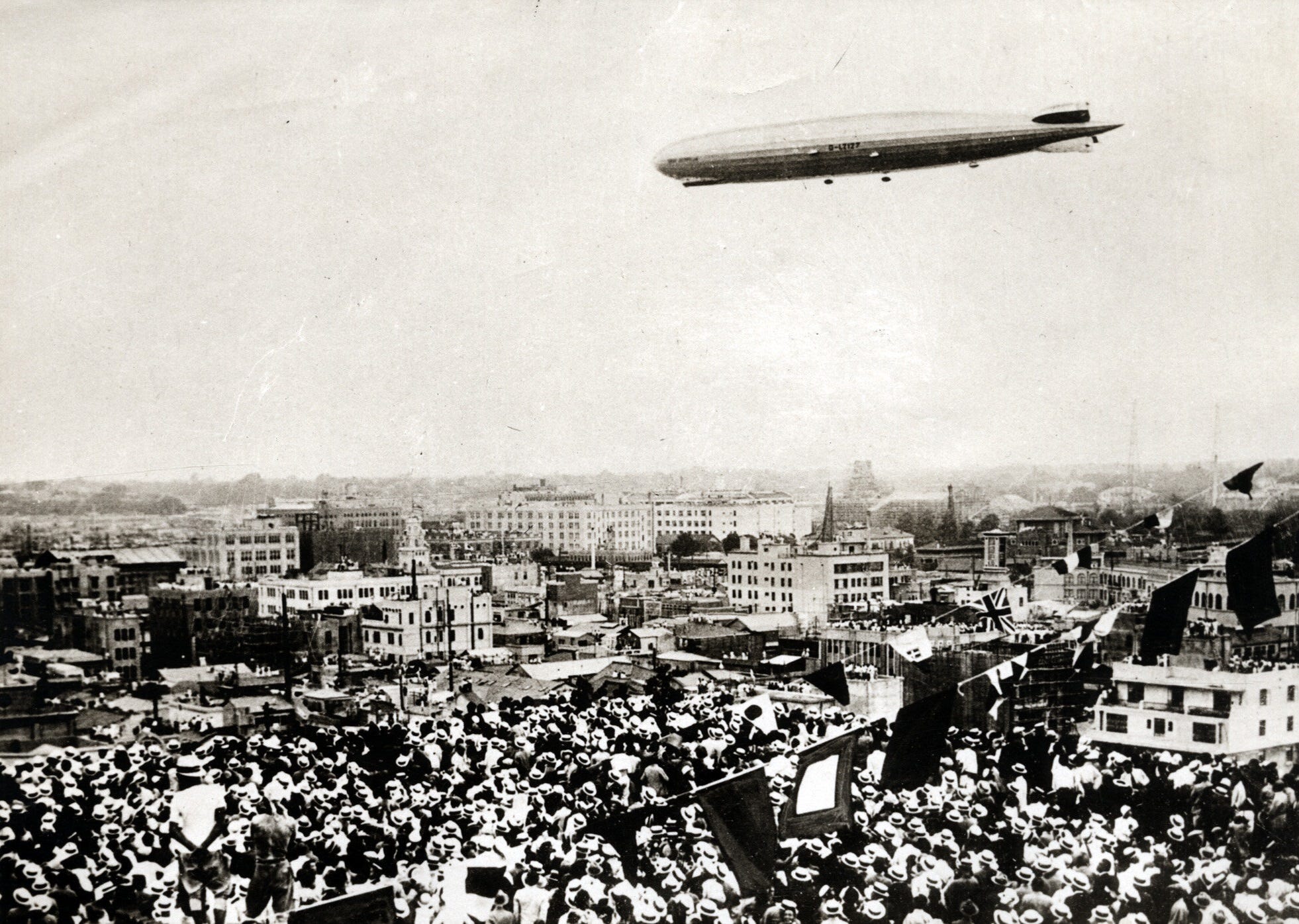
It is impossible to convey to you, dear reader, how exciting the airship future was. HG Wells capitalized on his War of the Worlds fantasy novel with 1908’s The War in the Air, in which America is invaded by Zeppelins (we lose). Some considered it his masterpiece.
Airships proved humans could fly. People rushed to gawk … and invest ... in tomorrow, today.
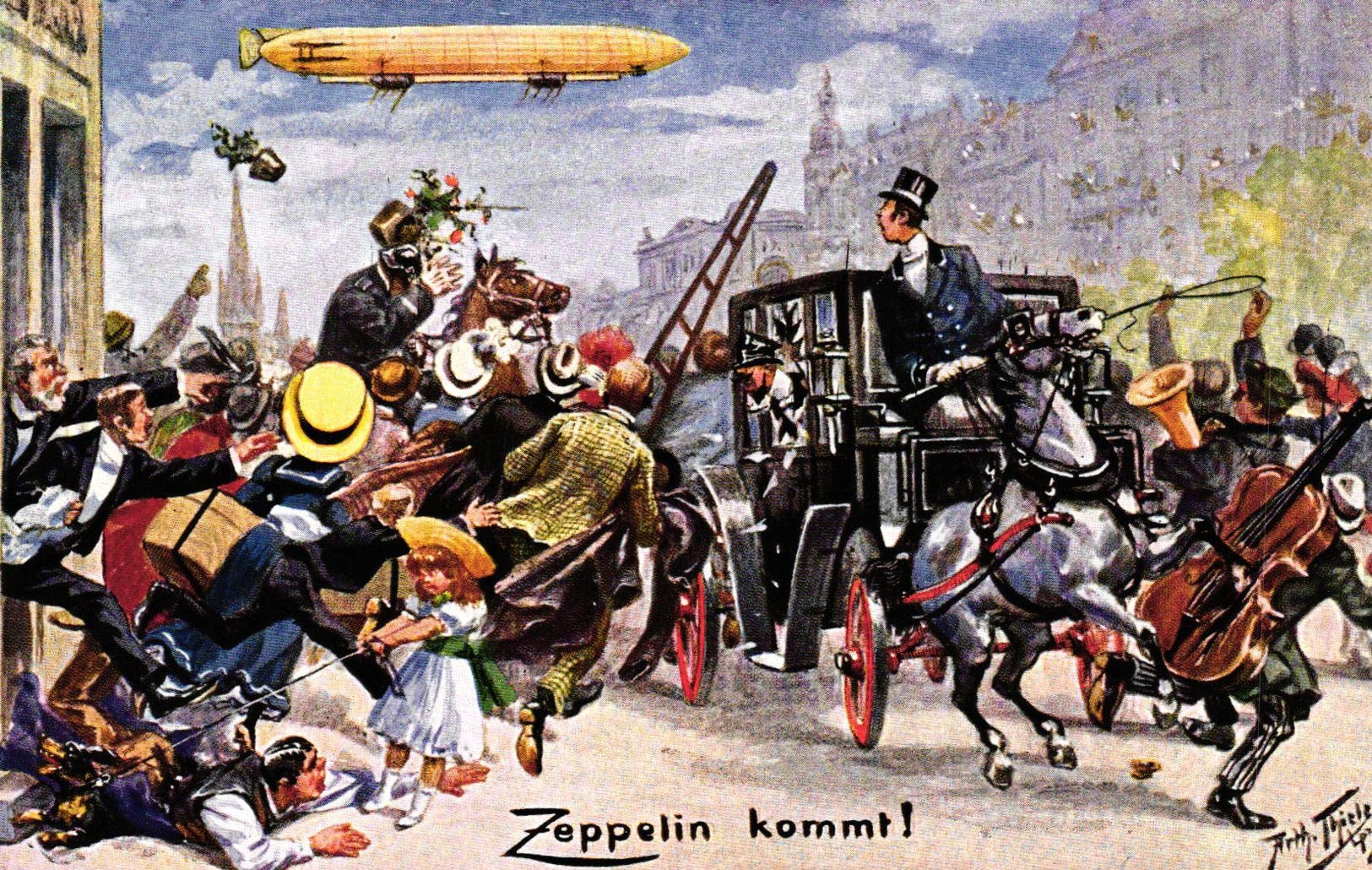
But there is a difference between a technology showing you the future and getting you there.
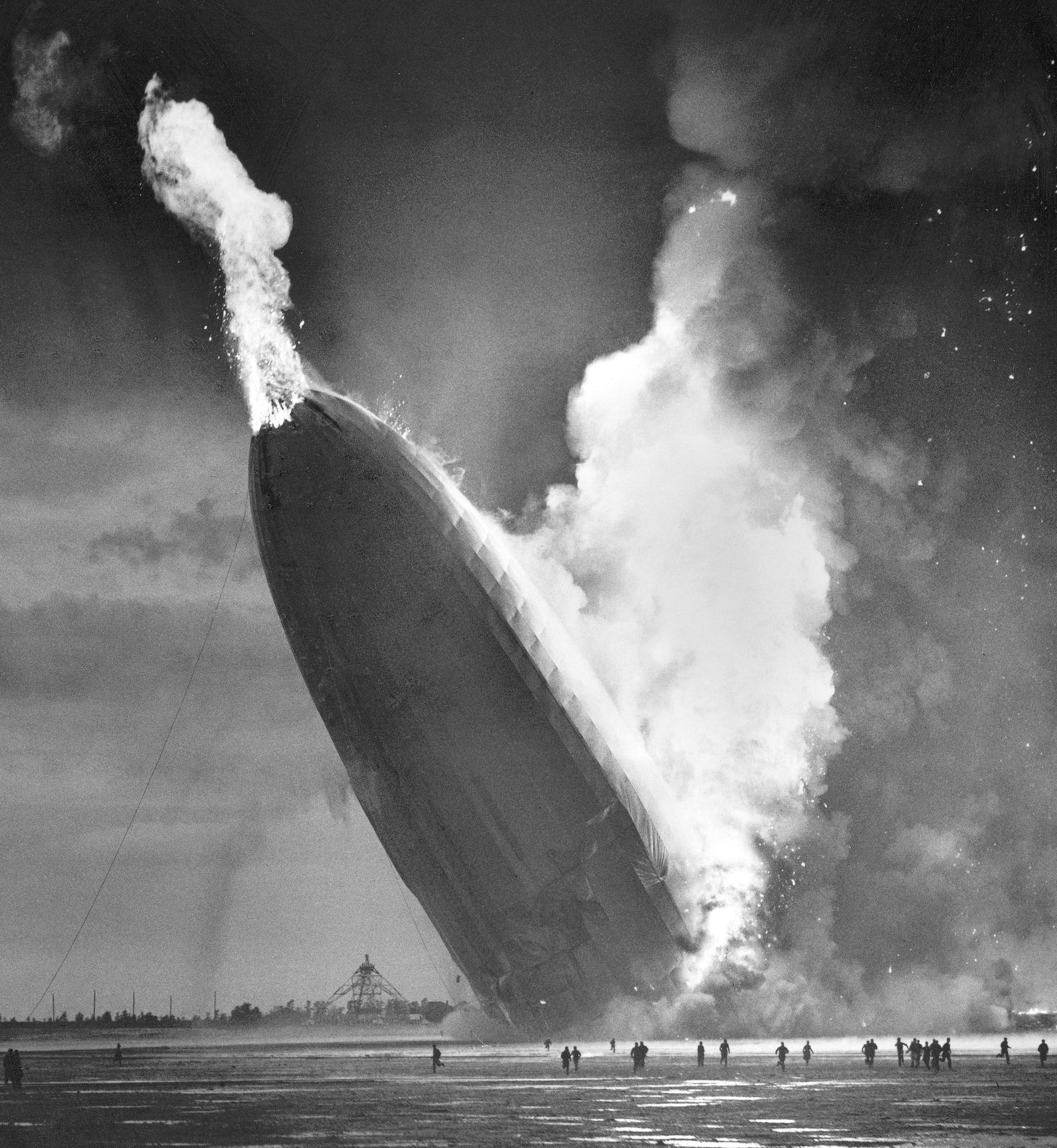
Zeppelins were not fit to purpose for the new world they created: easily blown off course, weighed down by air moisture, and an easy target for gunfire. Plus, they had a nasty habit of exploding into large hydrogen bombs.
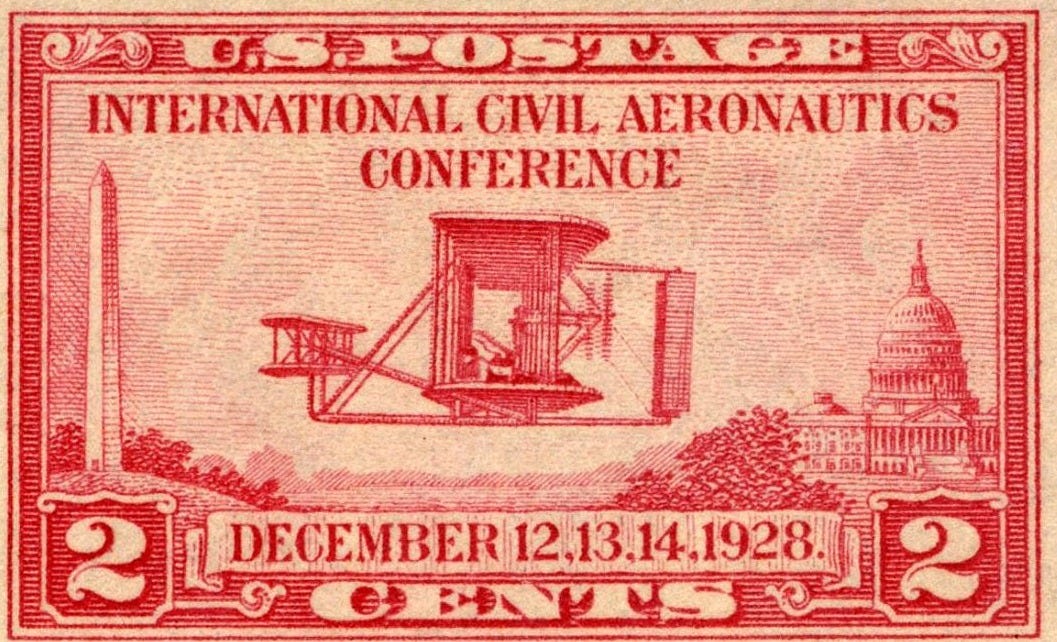
La France flew first, when Orville Wright was just 13 years old. Zeppelins took off while he and his brother were still tinkering in a bicycle shop. The flying machine they took to Kitty Hawk in 1903 crashed nearly as often as it flew. But, with aerodynamic wings and a strong enough engine, they beat gravity at its own game.
In 1910, it was obvious people could soar through the sky, it just wasn’t clear how. By 1940 it was. Zeppelins became a cute thing people used to do. There were simply better ways to fly.
Bitcoin (BTC) will become the Zeppelin of the money future. It pointed the way. It cannot take you there.
Why? Because there are three historical precedents for cryptocurrency. All bode badly for Bitcoin.
History Lesson #1: Nobody Wants to Fly This Way
No one treats Bitcoin like money, just as no one uses dirigibles to go on vacation.
As I explained in my (clears throat, national bestselling book, cough), all American money was once self-issued. The US government did not create currency for nearly a century.
People made their own money. Just like “peer-to-peer” cryptos today, the authority for money was people’s trust in each other. The best, called banknotes, were printed by banks and (supposedly) backed by gold. The worst, called shinplasters, were printed by local people and businesses backed by whatever they offered you (other banknotes, goods from their store, silverware). Problem was, people regularly couldn’t pay and banks rarely had the gold. Just like today’s digital Dogecoin, values fluctuated wildly. If banks failed, business folded, or a person fled…your money could go to $0 overnight.
Then, in 1862, the federal greenback dollar arrived with two promises. By law, you could pay our debts and your taxes with it. Americans ditched their old money for the new, better version for one very simple reason: it worked.
We ran this experiment once before. Americans are not using Bitcoin like money because the money we already have works just fine. Bitcoin has failed the use-case argument.
History Lesson #2: Bitcoin “Fought the Law and the … Law Won”
Those old, self-issued currencies existed under a weird patchwork of local and state rules. Some jurisdictions allowed small denominations, others did not. All required banks to redeem for gold on demand, but some let you put branches in locations so remote no one could find them to redeem anything. A banknote from one state had no legal guarantee in others. The same is true for BTC today, which operates under a dizzying array of state laws and even city ordinances.
Then, Congress passed the Legal Tender Act (1862), National Currency Act (1863) and National Banking Acts (1865, 1866), effectively creating one set of national money rules. Competitors to the greenback were driven out of existence.
The Clarity Act that the Senate will consider this fall does just that, creating one national cryptocurrency standard rather than many local ones. But crypto’s loadstar, Bitcoin, was birthed in and thrived beneath a lack of jurisdiction. Founder Satoshi Nakamoto’s promise was a peer-to-peer network “without the need for a trusted third party”: money without banks or banking law. No government oversight needed, just a way of selling and buying where the system itself was the authority for taking the money.
Whatever the Clarity Act’s finalized details, that dream dies with its passage. The bill’s promoters say the law will increase public trust and buoy Bitcoin’s value. What advocates miss is that this first step to regulation is the beginning of the end, just as it was for banknotes and shinplasters 150 years before.
Bitcoin’s raison d’être is being voted down.
If Bitcoin is a protest against the power of the modern state, protestors are about to find out just how powerful that state really is. I’ve met two people who lost millions in crypto wallet hacks. Both went to the FBI to get their money back. How is that “subverting the government” thing going?
History Lesson #3: Farther, faster, cheaper, safer.
Planes won the air race because they were better at flying. Stablecoins (on-chain cryptocurrencies backed by another asset, usually Treasury Bills) will win the crypto race for the same reason: they are better at being money.
The future of cryptocurrency as a technology has finally come into focus. On-chain verifiability and “always on” 24/7 transferability (not waiting for banking hours) are the highest and best use.
That is why the real bull market for crypto currency may look like Eurodollars, as practitioner-theorist Nic Carter has explained.
Eurodollars arose in the 1950s for global businesses that preferred to trade in dollars but lacked access to US Banks. So foreign banks started holding dollar liabilities on their books to trade against, creating a vast offshore dollar credit system independent of the Federal Reserve and strengthening the dollar’s global reach. First met with skepticism, by 1973 their utility outweighed the novelty so that, today, most US dollars aren’t even in the United States.
Stablecoins can now do what Eurodollars once did, offer dollar-denominated liabilities for people outside the US to trade in de facto dollars. Bitcoin, whose value fluctuates wildly, does not.
Stablecoins are planes. Bitcoin is a Zeppelin.
That future is already here. Global communities, businesses especially, are increasingly adopting dollar backed stablecoins because they are superior to inflationary local currencies and more useful than Bitcoin. This is precisely why, even though stablecoins are just over 10% of the total crypto market, they conduct most of the transaction volume by far. Stripe, a payment company, started allowing settlement in stablecoins in 2024. Adopting that blockchain tool increases demand for the T-bills that back them. As US Treasury demand increases, the dollar system gets a new lease on life. Ironically, what started as an alternative to the inflationary fiat regime is actively supporting it.
The Bitcoin thesis was that it offered stability the inflationary US dollar did not, a better way to pay, and a global currency. But neither Americans nor global markets are acting like any of that is true.
Like Zeppelins, Bitcoin is energy inefficient in an expensive energy world. It takes too long (one hour to verify vs. just seconds for stablecoins). Transactions cost a lot ($5 vs. fractions of pennies for stablecoins). And Bitcoin may or may not adapt to the quantum computer future that could hack wallets. In all these ways, it is inferior to its competitors. But it does have a cool symbol: ₿.
Bitcoin’s value fluctuates only with inflows, and right now the money is running away. The AI boom is hoovering up both the investment capital that pushed air into the Bitcoin balloon and driving up the energy costs to mine more. The cost to unlock a new coin is between $60,000 and $95,000. The average new coin is minted at a 20% loss. Bitcoin zealots say, “this is great news! $60k must be the Bitcoin floor. Surely an asset cannot be worth less than the cost of new supply!”
That isn’t true, and it misses the point.
It isn’t that Zeppelins are too expensive to build. It’s that they aren’t good for much once built.
History bodes badly for Bitcoin. If it is a shinplaster, there is a gravitational pull toward $0. If a dollar substitute, it is not fit for purpose. Once the law picks a side, not everything will fly.1
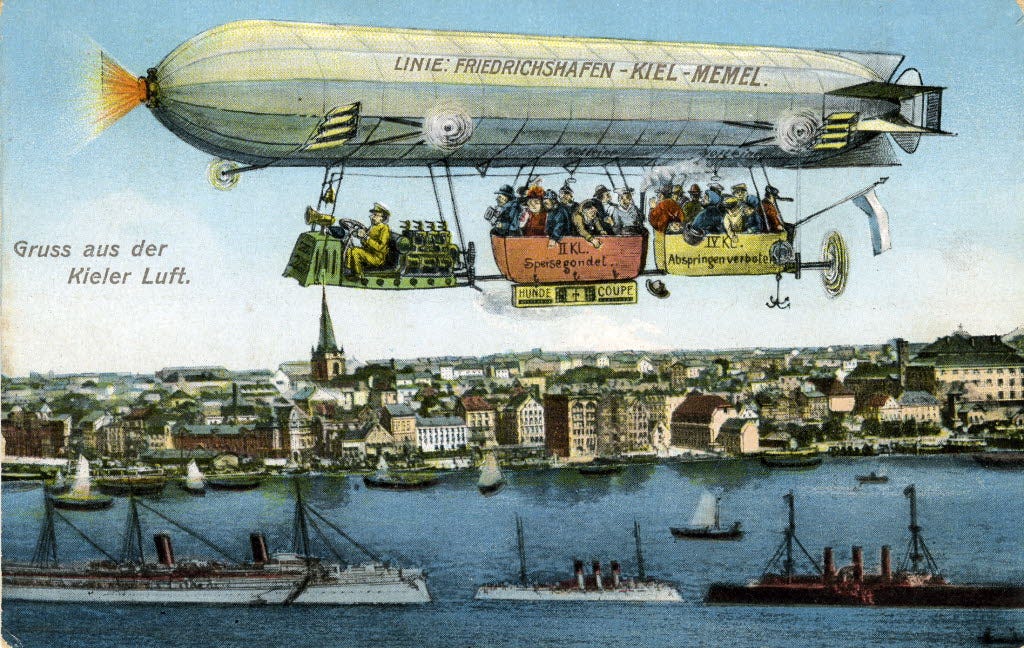
We all get excited to see the Goodyear Blimp over a stadium, but we don’t use it to get to the game.
And that is what Bitcoin will be to your kids… a retro thing their grandparents got into, a holdover from the past that pointed to the future but couldn’t get you there.
Ponder That.
Buy the Book!

Order on: Amazon | Barnes & Noble | Bookshop.org | Books A Million
Some prominent financial thought leaders have told me that I am wrong about BTC going to $0 because it has value for illegal transactions and the many bag holders will clutch their pearls, hope, and wait for a rise. So I will accept that it may not go to $0. But for those purposes, it doesn’t need to stay at $60,000, either.